

Strategies for capillary electrophoresis: Method development and validation for pharmaceutical and biological applications
Finja Krebs, Holger Zagst, Matthias Stein, Ratih Ratih, Robert Minkner, Mais Olabi, Sophie Hartung, Christin Scheller, Blanca H. Lapizco-Encinas, Cari S. van de Griend, Carlos D. García, and Hermann Wätzig
Electrophoresis 44 (2023) 1279–1341, Cover article, Top Cited Award

From Glow-Sticks to Sensors: Single-Electrode Electrochemical Detection for Paper-Based Devices
Ezequiel Vidal, Claudia Domini, Daniel C. Whitehead, and Carlos D. Garcia
Sensors and Diagnostics 1 (2022) 496 – 503
Cover article, featured in the themed collection Sensors in a Digital World

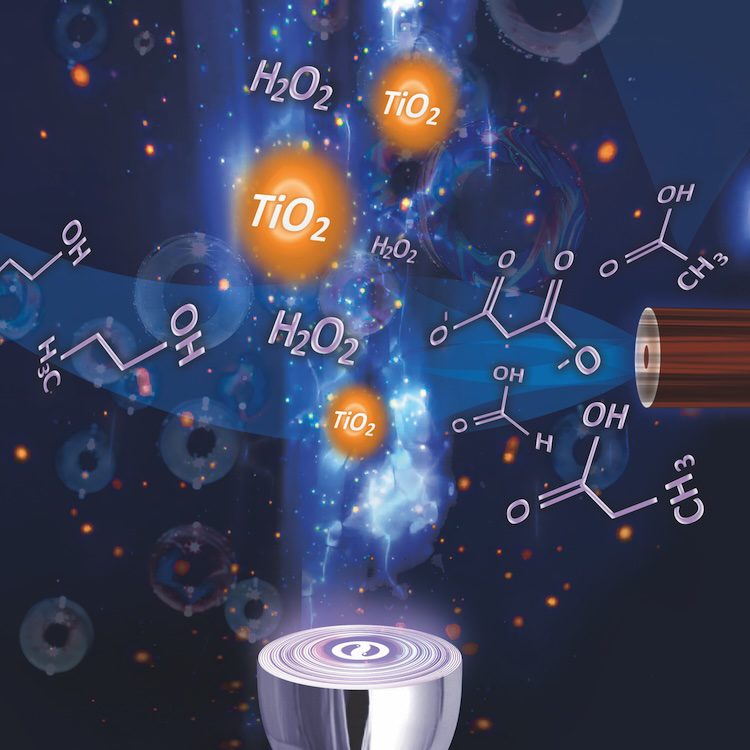
Monitoring the Advanced Oxidation of Paracetamol using ZnO films via Capillary Electrophoresis
Luz A. Hernandez-Carabali, Rakesh Sachdeva, Jose B. Rojas-Trigos, Ernesto Marin, and Carlos D. Garcia
Journal of Water Processing 41 (2021) 102051

Fast Degradation of Hydrogen Peroxide by Immobilized Catalase to Enable the Use of Biosensors in Extraterrestrial Bodies
Paige A. Reed, Bryan A. Lagasse and Carlos D. Garcia
Astrobiology 21 (2021) 191-198
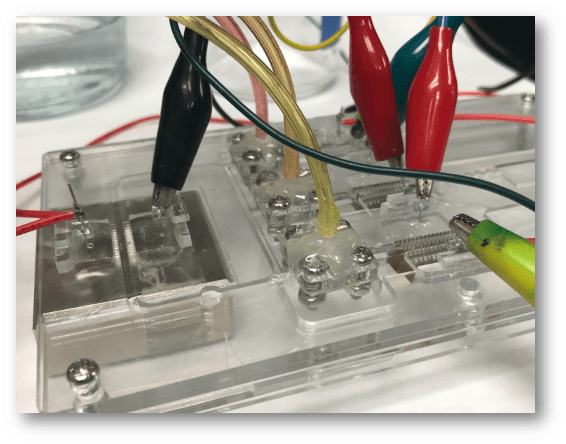
A Multi-pump Magnetohydrodynamics Lab on a Chip Device for Automated Flow Control and Analyte Delivery
Rafael M. Cardoso, Robson O. Dos Santos, Rodrigo A. A. Munoz, Carlos D. Garcia, and Lucas Blanes
Sensors 20 (2020) 4909
