

Interaction of DES with cells
The vast majority (>99%) of the injected nanoparticles do not reach their intended destination, which hampers their clinical application. Addressing this problem, the Tanner lab has recently demonstrated that specific choline-based DES can direct preferential accumulation in certain tissues while others can promote transdermal transport or even hitchhike onto blood cells. Considering her unique expertise, REU participants will be tasked with unveiling the role of DES in drug delivery, following the hypothesis that such interactions depend on the chemical properties of the components selected to build the DES. Thus, participants will first synthesize a library of DES based on choline and […]
Light emitting materials based on chiral DES
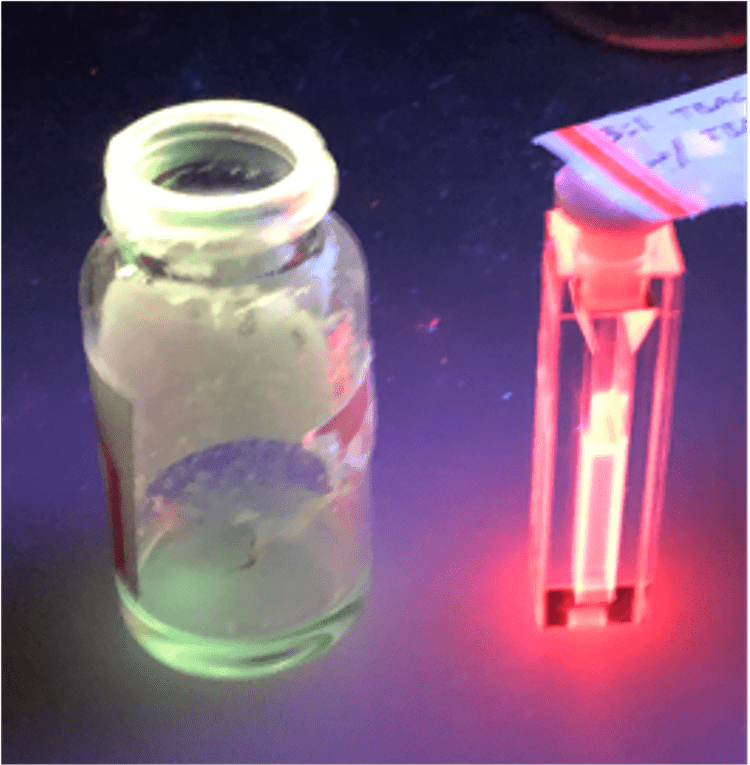
This research aims to develop and characterize circularly polarized light-emitting materials based on chiral DES that are solvents for luminescent lanthanide complexes. Recent work has demonstrated that chiral DES (incorporating at least one chiral component) can induce circularly polarized luminescence (CPL) from luminescent lanthanide (europium and terbium) complexes. These results evidenced that both chiral and achiral components play an essential role in influencing the induced CPL. Aiming to further this work, participants in this research project will engage in various activities, ranging from improving a current database of chiral DES (already containing ~400 binary entries) to exploring ternary chiral DES mixtures, […]
Stability of H-Bonding in Aqueous Mixtures of NADES
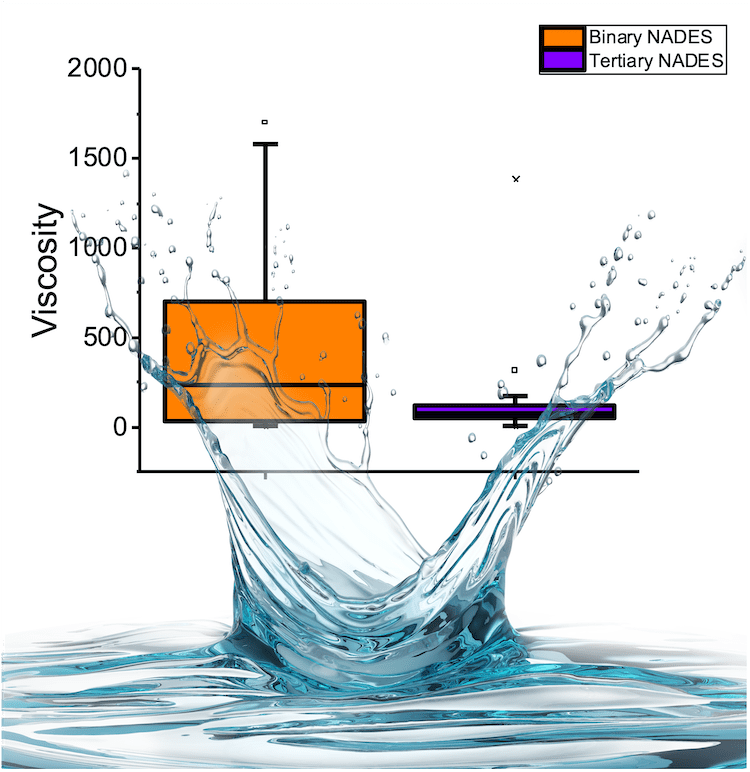
Most reported NADES are highly viscous at room temperature, a characteristic that is attributed to the formation of the hydrogen bonding network among their components and that represents the most pressing obstacle for their implementation in a wide variety of fields. Although different strategies have been presented to overcome this issue, adding water is probably the most effective one . In this regard, some authors state that the addition of water does not affect the interaction of the main components in a NADES, while others argue that water has the potential to modulate the microstructure of DES and the resulting […]
X-panded polyiodides and DES
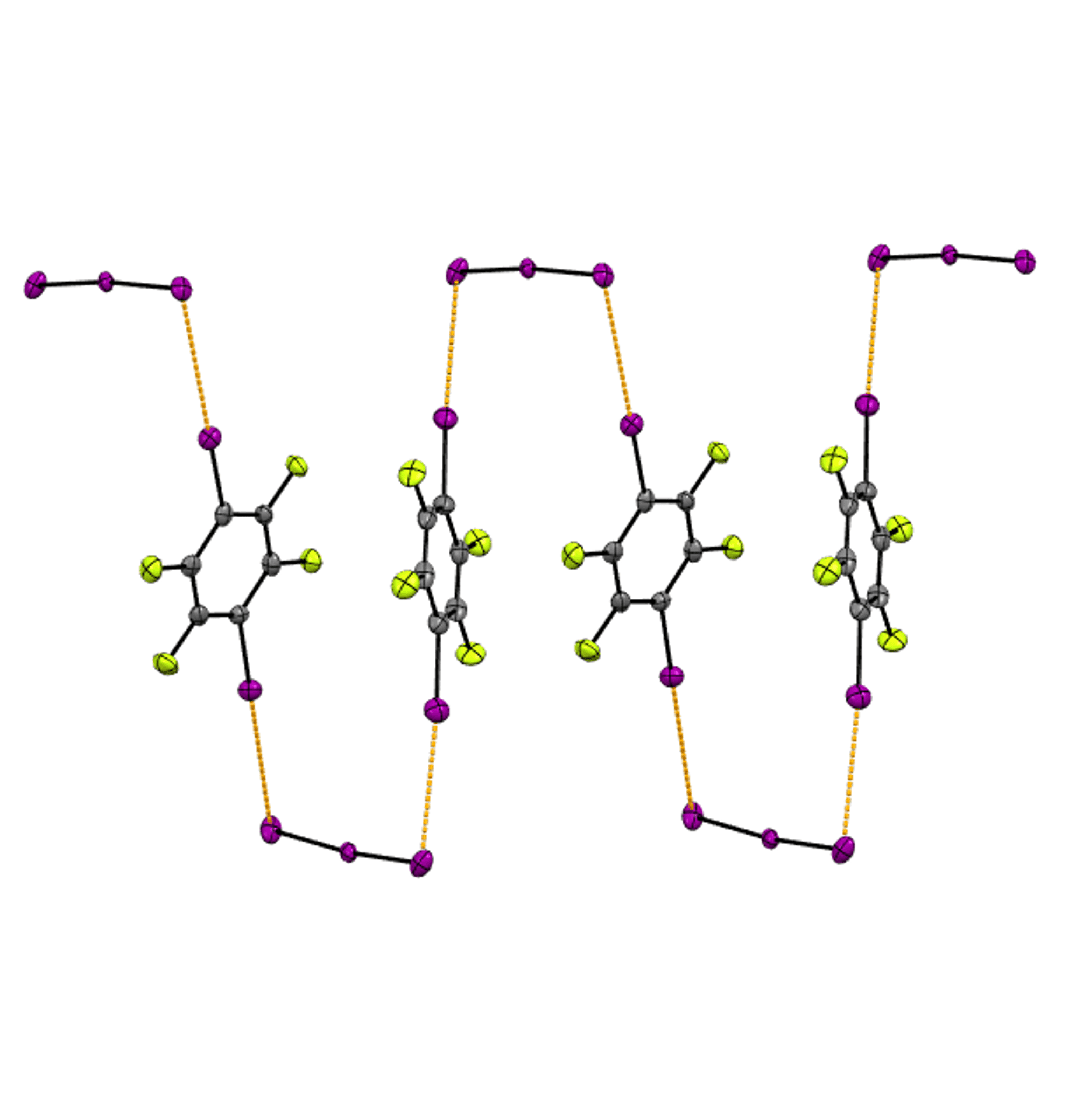
While most DES are formed by hydrogen bonding, Pennington’s group recently observed that grinding 1,3-dithiane with 1,2-F4DIB resulted in the formation of the first reported DES formed by halogen bonding (XB). This strong and highly directional interaction can be exploited to develop supramolecular synthons for rational crystal design and materials development. While these XB interactions are very similar to H-bonds, they have several significant advantages, including a higher degree of directionality due to the localization of the electrophilic site, which is exactly opposite to the covalent bond to the halogen atom. The strength of the interaction is easily tunable by varying […]