
Students working in this project will be mentored by Dr. Todd Hopkins, at Butler University



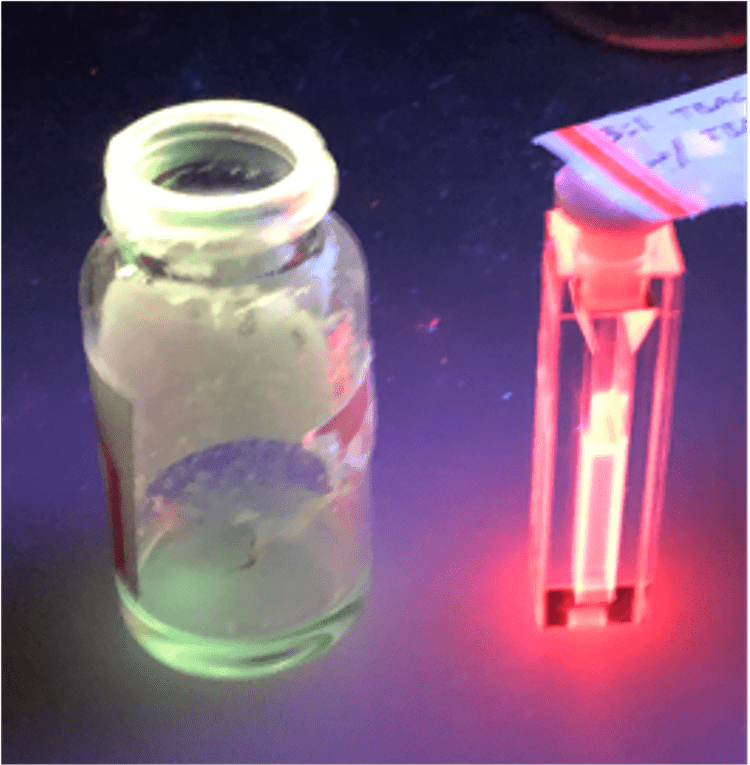
This research aims to develop and characterize circularly polarized light-emitting materials based on chiral DES that are solvents for luminescent lanthanide complexes. Recent work has demonstrated that chiral DES (incorporating at least one chiral component) can induce circularly polarized luminescence (CPL) from luminescent lanthanide (europium and terbium) complexes. These results evidenced that both chiral and achiral components play an essential role in influencing the induced CPL. Aiming to further this work, participants in this research project will engage in various activities, ranging from improving a current database of chiral DES (already containing ~400 binary entries) to exploring ternary chiral DES mixtures, where the third component will be used to improve the solubility and control CPL from the lanthanide solutes. Participants will also be involved with the characterization of the DES’ ability to induce photoluminescent CPL from 1) non-covalent interactions with a racemic mixture of luminescent lanthanide complexes and 2) through a coordination interaction between the chiral DES solvent and luminescent lanthanide complexes. By the end of the summer, participants will also get the chance to build (and test) CP-OLEDs (circularly-polarized organic light-emitting diodes) incorporating their own chiral DES + lanthanide complexes. In addition to the training linked to the characterization of the DES (melting point, density, and CPL spectra), participants will also be introduced to basic molecular dynamics simulations and electronic structure calculations, to explain the CPL induced by the chiral DES.
Students working in this project will be mentored by Dr. Todd Hopkins, at Butler University