

Loop-based genetic switches represent a ubiquitous regulatory mechanism of transcription present in all kingdoms of life. These switches determine developmental alternatives, such as quiescence versus virulence in bacteriophages, or organ identity in plants. Therefore, studying them offers a unique opportunity to discover fundamental regulatory principles. At their basis is the interaction between proteins bound at distant sites which causes the looping out of the intervening DNA. The looped and unlooped DNA states correspond to the ON/OFF (or viceversa) position of the switch. Investigating the conformations, thermodynamics and kinetics of different repressor-mediated genetic switches, we were able to point out the elements that are essential to make most loop-based genetic switches robust and yet responsive to environmental cues. Some of these essential elements are: (i) modular binding sites with differential affinity for cooperative and tunable protein interactions, (ii) non-specific binding (in addition to specific binding) for synergy and molecular memory, (iii) DNA supercoiling for added stability and switching trigger, (iv) and a protein loop closure that can withstand high torsional stress to maintain the looped switch state in the face of varying torsion on the DNA outside the loop.
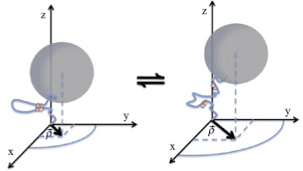
Loop formation may be visualized and characterized by several single molecule techniques, including the tethered Particle Motion (TPM) technique and atomic force microscopy (AFM), as the figure below shows


Relevant Publications
| Authors | Title | Journal | Volume | Pages | Year |
| Yue Ding, Carlo Manzo, Geraldine Fulcrand, David Dunlap, Fenfei Leng and Laura Finzi | “DNA Supercoiling: a Regulatory Signal for the Lambda Repressor” | PNAS | 111(43) | 15402-15407 | 2014 |
| Marta Adelina Mendesa, Rosalinda Fiorella Guerra, Markus Christian Berns, Laura Finzi, Martin M. Kater and Lucia Colombo | “MADS-domain Transcription Factor Complex Induced Short-Range DNA Loop Formation is Essential for Target Gene Expression in Arabidopsis” | Plant Cell | 25 | 2560-2572 | 2013 |
| Haowei Wang, Ian Dodd, Keith Shearwin, David Dunlap and Laura Finzi | “Single molecule analysis of DNA wrapping and looping by a circular 14-mer of the 186 bacteriophage CI repressor” | Nucleic Acids Research | 41 | 5746-5756 | 2013 |
| Carlo Manzo, Chiara Zurla, David Dunlap and Laura Finzi | “The effect of non-specific binding of lambda repressor on DNA looping dynamics” | Biophys. J. | 103 | 1753-1761 | 2012 |
| Sachin Goyal, Chandler Fountain, David D. Dunlap, Fereydoon Family, Laura Finzi | “Stretching DNA to quantify non-specific binding” | PRE | 86 | 011905 | 2012 |
| Dale E.A. Lewis, Phuoc Le, Chiara Zurla, Laura Finzi, and Sankar Adhya | “Multi-level Auto-regulation of CI Protein in a λ lysogen” | PNAS | 108 (36) | 14807-14812 | 2011 |
| Paul Liebesny, Sachin Goyal, David Dunlap, Fereydoon Family and Laura Finzi | “Determination of the Number of Proteins Bound non-Specifically to DNA” | Journal of Physics: Condensed Matter | 22 | 414104 | 2010 |
| L. Finzi and D. Dunlap | “Single-molecule approaches to structure, kinetics and thermodynamics of transcriptional regulatory nucleoprotein complexes” | minireview – JBC | 285 | 18973-18978 | 2010 |
| C. Zurla, C. Manzo, D.D. Dunlap, D.E.A. Lewis, S. Adhya, L. Finzi | “Direct demonstration and quantification of long-range DNA looping by the λ bacteriophage repressor.” | NAR | 37 | 2789-2795 | 2009 |
| H. Wang, L. Finzi, D. Lewis and D. D. Dunlap | “AFM studies of the CI oligomers that secure DNA loops” | Curr. Pharmaceutical Biotechnology | 10 | 494-501 | 2009 |
| Suparna Sarkar-Banerjee, Sachin Goyal, Ning Gao, John Mack, Benito Thompson, David Dunlap, Krishnananda Chattopadhyay and Laura Finzi | “Specifically bound Lambda repressor dimers promote adjacent non-specific binding” | submitted |
Relevant Techniques
| Method | Used for |
| AFM | to image DNA-protein complexes and establish probabilities |
| TPM | to measure dynamics of loop formation |
| MTs | to measure how supercoiling affects genetic switches |
| FCS | to measure cooperative effects |
Complete List of Published Work in MyBibliography:
https://www.ncbi.nlm.nih.gov/myncbi/browse/collection/40647244/?sort=date&direction=descending