
Students working in this project will be mentored by Dr. Christian Agatemor, Bucknell University



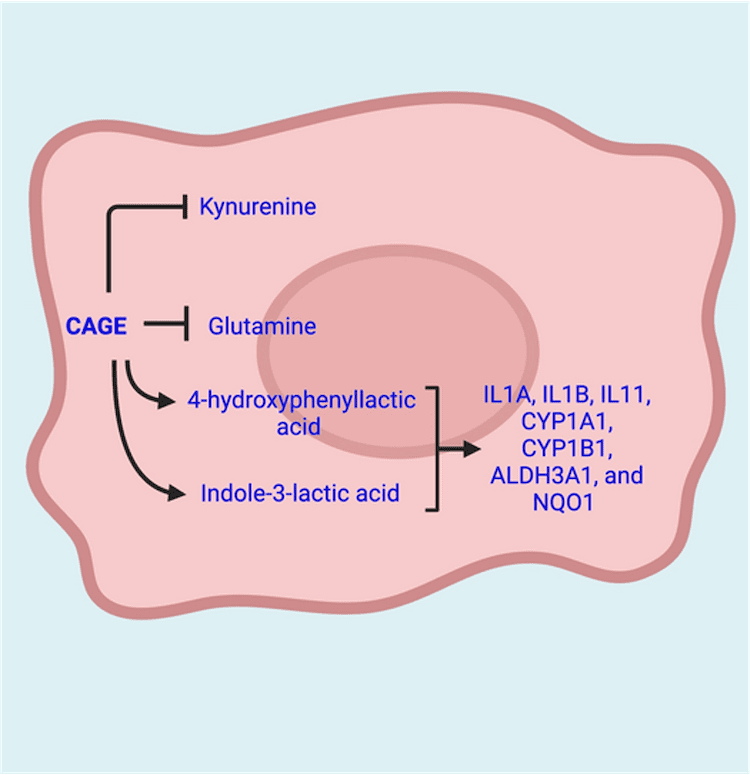
Due to improved biocompatibility, natural deep eutectic solvents (NADES) are increasingly explored in biomedicine.93 Yet, our understanding of how they interact with biomolecules at multiomic levels- metabolome, proteome, epigenome, and transcriptome – remains poor. Recently, Agatemor’s group found that a NADES designed from choline and geranic acid (CAGE) upregulates indole-3-lactic acid and 4-hydroxyphenyllactic acid at the metabolomic level, resulting in ligand-independent activation of aryl hydrocarbon receptor to signal the transcription of genes at the transcriptomic level.92 Such metabolic-transcriptomic biochemical crosstalk has important implications for metabolic regulation/engineering of inflammation, immune response, cell reprogramming, and chemical detoxification.94 This finding prompted new questions on what structural details of the NADES trigger this crosstalk. Elucidating these details will likely pave a scientific foundation to design biocompatible NADES for the metabolic engineering of human cells to regulate inflammation, immune response, cell reprogramming, and chemical detoxification. For this REU, students working in the Agatemor Research Group will participate and be trained in high-throughput synthesis and biochemical screening to uncouple the structure-activity relationship of NADES with a focus on activating aryl hydrocarbon receptors. The training includes LC-MS/MS proteomic and metabolomic analyses as well as Illumina platform-based mRNA sequencing and bioinformatic analysis of multiomic data. At the end of the research experience, the student will be primed on the skillset required to pursue a STEM career in chemistry and biology.
Students working in this project will be mentored by Dr. Christian Agatemor, Bucknell University