864-889-0519 ihg@clemson.edu

Innovative Research for a Healthier Tomorrow

Equipping the Future of Genomic Research

Comprehensive Genomic Research

Leveraging high-throughput sequencers, automated liquid handlers, and precision analytical instruments to enable large-scale, high-resolution genomic investigations.

Advanced Computational Resources

Utilizing high-performance computing clusters, cloud-based platforms, and GPU-accelerated nodes to support intensive data processing, AI/ML workloads, and bioinformatics pipelines.

Collaborative Research Environment

Supporting interdisciplinary collaboration through shared access to specialized core facilities, centralized imaging systems, and integrated data infrastructure across partner campuses.

Our Mission

The Center of Biomedical Research Excellence (COBRE) in Human Genetics supports the establishment of cutting-edge research infrastructure through a phased funding model, enabling the development of state-of-the-art biomedical research centers in IDeA-eligible states. Our program prioritizes the acquisition and integration of advanced genomic and molecular biology equipment to drive innovation in genetic research. By investing in high-performance instrumentation and core facility development, we aim to accelerate discoveries in human genetics that improve health outcomes in South Carolina and beyond. We are dedicated to creating a collaborative research environment anchored by world-class technology and scientific excellence.

This map details cities of South Carolina, Alabama, North Carolina, Georgia, and Mississippi.

Clemson University Main Campus

Explore Our Equipment
Advanced Fabrication and Testing Core

Services and equipment include 3D printers for rapid prototyping (Solipro, BigBuilder, MakerBot, Objet, Z-corp, Solidica, Water Jet) for polymers and metals; information-centric smart manufacturing for fabrication of smart parts; ultrafast laser micromachining system for fabrication of micro sensors; near-field nanofabrication, spectroscopy, and multiphoton microscopy for fabrication of nanostructures; general-purpose machine shop services (engineering design, precision machining, fabrication, rapid prototyping, reverse engineering and electronics/instrumentation); instrumentation and testing tools (electrical and microwave equipment; optical characterization equipment); microscopic imaging tools (TEM, SEM, FIB, OCT); material property characterization tools (X-ray, DMA, MTS/Instron, impact, fatigue and wear testing); and spectroscopic characterization tools (Raman, FTIR).

Aquatic Animal Research Laboratory

Animal rooms – Animal rooms are approximately 225 sf (12×20’). Rooms are outfitted with a wash sink, centrally located floor drains, personnel lights, and a computerized LED animal lighting system. Each animal room has 2-4 dedicated 20-amp circuits with backup power, and an additional 4-6 dedicated 20 amp circuits. Backup power is provided by a diesel generator serviced through Clemson Facilities.

Wash room – The washroom has an oversized sink for scrubbing tanks and large objects. Plastic totes and bleach are provided for tanks, nets, and miscellaneous equipment sanitation. There is a dedicated small tank washer from Tecniplast that can wash up to twelve 3.5-liter zebrafish style tanks per 25-minute cycle. There are dedicated freezers in the washroom for carcass disposal and food storage.

Water quality – The water quality laboratory is open for all facility users. Bench top pH and conductivity meters are available to test or verify inline aquatic system water quality probe values. A titration station is set up for alkalinity and hardness determinations. API colorimetric test kits are provided for nitrogen speciation determination. Several balances are on hand for weighing out salts or taking precise measurements. Select water quality salts are available along with MS-222 for euthanizing aquatic organisms. The water quality lab can also be used for dissection, necropsy, or other required procedures.

Microscopy laboratory and injection room – The microscopy laboratory is outfitted with three Leica S9i stereomicroscopes. One is equipped with a color camera and hooked up to a 36” TV monitor for training and student observation.  Two Leica M80 stereomicroscopes are set up specifically for embryo injections. The injection workstations use a Narishege MN-151 joystick micromanipulator combined with either a Harvard Apparatus BTX Microject 1000A, or a MinJ-D all digital microinjector by TriTech Research. One of the injection stations is outfitted with a camera and a video monitor for training and student observation.  Also housed in the microscopy laboratory is a Leica M165 fluorescence microscope using the LAX operating system with mCherry, GFP, and GFP LP filters.

Growth chamber and incubators – Two small bench top Yamato convection type incubators with a viewing window are available for embryo incubation. Normal temperature is set at 28° C. A larger Caron 25 cubic foot growth chamber is also available for embryos.  This is a closed system with an internal narrow range (400-500 nm) lighting system and a 24-hour timer for day/night simulation. The Caron growth chamber is a chiller or an incubator with a temperature range of 10-40° C.

Water source and purification – Water is sourced from the Anderson Regional Joint Water System and comes into the facility with a chlorine concentration of 1 mg/l.  Water purification for culture and animal use is performed at the room level. Water is purified through a process of sediment and carbon filtration, followed by reverse osmosis.

Clemson Center for Geospatial Technologies (CCGT)

The CCGT manages ESRI’s campus-wide license, providing the research community with access to a suite of geospatial analysis, mapping, and data management technologies. These technologies encompass desktop, enterprise, and cloud-based solutions, available at no cost. The center offers a hybrid cyberinfrastructure that enables researchers to utilize high-throughput computing through the local GIS cluster (GalaxyGIS), virtual machine (VM) technologies for desktop GIS, high-performance computing via the Palmetto cluster, and cloud GIS and data services through ArcGIS Online and locally managed servers. CCGT encompasses a dedicated training facility that serves as a space for GIS training, workshops, seminars, summer school, webinars, class support, and customized training sessions. The training room is equipped with 20 student workstations, each featuring dual monitors. Additionally, the center maintains and supports access to ground and air drone technologies for imagery and LiDAR data collection.

Cloud Computing Resources (CloudLab/emulab)

Clemson University hosted resources for CloudLab include a 316-node compute cluster and a 6-node storage cluster. The CloudLab cluster nodes contain a mix of Intel Xeon, AMD EPYC, and IBM Power PC architectures, and offer a variety of co-processors such as NVIDIA Tesla GPUs, NVIDIA BlueField-2 SmartNICs, and Xilinx FPGAs. The latest expansion of the CloudLab cluster contains 32 nodes with 36-core Intel Ice Lake CPUs featuring Speed Select and SGX capabilities, and 32 nodes with 32-core AMD EPYC Milan CPUs featuring SEV capabilities. All 64 new nodes contain 256GB of RAM, NVMe local storage, and 100GbE Networking. Four of the storage nodes contain dual 10-core CPUs, 256GB memory, 8 1TB HDDs, and 12 4TB HDDs, and 2 of the storage nodes contain dual 6-core CPUs, 128GB memory, and 45 6TB HDDs.

Electron Microscopy Facility

Scanning Electron Microscopes (SEM) – Tabletop Variable Pressure SEM TM3000, Variable Pressure SEM S3400, Variable Pressure SEM SU5000, Variable Pressure SEM SU6600, High Resolution SEM Regulus8230, Ultra High-Resolution SEM SU9000, Nanodue’t Double Beam Microscope NB5000.

Transmission Electron Microscope (TEM) – Variable Energy TEM HT7830, TEM H9500.

Surface Sciences – X-Ray Photoelectron Spectroscopy (XPS) PHI VPIII, Auger Electron Spectroscopy (AES) PHI VPIII, Ultraviolet Photoelectron Spectroscopy (UPS) PHI VPIII, Low Energy Inverse Photoemission Spectroscopy (LEIPS) PHI VPIII, Time-of-Flight Secondary Ion Mass Spectrometry (TOF-SIMS) PHI nanoTOF 3.

Porosimetry – Quantachrome Autosorb iQ Gas Sorption Analyzer.

Godley-Snell Research Center

Imaging and specialized equipment includes a Toshiba Aquilion TSX-101A 16-slice computed tomography unit capable of imagining animals up to 300 pounds; a Esaote Vet-MR Grande magnetic resonance imaging unit with a .25 tesla field for large animal magnetic resonance imaging; a Bruker SkyScan 1176 Micro CT unit capable of 9, 18, or 35µm resolution computed tomography imaging in rodents; a Perkin Elmer IVIS Lumina XR benchtop small animal optical (bioluminescent and fluorescent) imaging system and X-ray with up to 21 emission filter sets to capture emission from green to near-infrared; a Visual Sonics VEVO 2100 ultrasound ultra-high frequency unit; a GE Logiq e NextGen portable ultrasound unit (B-mode, M-mode, doppler, and color doppler capable; a Sound NEXT Equine DR portable radiology unit; a DigiGait Rodent Gait Analyzer to perform gait analysis for voluntary and treadmill walking over a range of speeds.

High Performance Computing (HPC) – Palmetto Cluster

The Palmetto Cluster currently benchmarks at 3.01 PetaFLOPS using 11,280 CPU cores and 2,611,200 accelerator cores and was ranked #239 in the 61st edition of the Top500 list of HPC clusters. The benchmark utilized 220 compute nodes with either NVIDIA Tesla V100, or NVIDIA Tesla A100 GPU Accelerators, and HDR100 Interconnect. The Palmetto Cluster currently contains over 1800 compute nodes consisting of over 1000 CPU-only nodes, and more than 700 GPU accelerated nodes. GPU accelerated nodes are also interconnected with high speed Infiniband networking. The latest compute nodes contain dual 32-core Intel Ice Lake CPUs, 256GB of memory, dual NVIDIA Tesla A100 GPU Accelerators, and HDR100 100G Infiniband Networking. Palmetto also contains special resources such as large-memory nodes (1TB of memory or more), and NVIDIA DGX systems for large scale AI/ML workloads. Storage on the Palmetto Cluster consists of approximately 3 PB of large-scale, backed-up project space, and approximately 2 PB of high-speed scratch space provided by a Beegfs parallel filesystem. There is an additional 120 TB scratch space consisting of all NVMe flash storage. As of July 2023, a new 500TB all-flash scratch space is available on Palmetto as part of the Indigo Data Lake, providing up to 5TB of space or 5 million files per user. The Palmetto Cluster is housed at Clemson’s Information Technology Center (ITC). The ITC is a 24/7 monitored environment with proper power, cooling, and physical security. The Palmetto Cluster is UPS and generator backed to prevent unexpected interruptions to compute jobs.

Light Imaging Facility

Olympus DSX1000 digital microscope, Leica SPE confocal, Leica SP8X MP confocal with hyvolution, Leica GSD/TIRF widefield, Leica THUNDER model organism imager, Leica CM1950 cryostat, Leica laser microdissection, Leica M125 stereoscope, Leica DM750P polarized light, Olympus LEXT optical profiler, Cytoviva hyperspectral, Nikon eclipse Ti-E, Biorad S3E cell sorter, Invitrogen Tali image-based cytometer, Invitrogen Countess cell counter. The following preparatory equipment is housed in the laboratory: 1 cell culture hood, 1 chemical fume hood, two CO2 incubators, two non-CO2 incubators, incubator shaker, open-air platform shaker, microcentrifuge, four mini-centrifuges, three vortex mixers, four electronic pipets, two refrigerators, two -20°C freezers, -80°C freezer, two Mettler-Toledo balances, pH meter, two stirring hot plates, and three specimen rotators. Users also have access to common equipment, including automatic dishwashers, autoclaves, ultra-pure water systems, and cold rooms.

Multi-User Analytical Laboratory and Metabolomic Core (MUAL)

Thermo Orbitrap Fusion Tribrid mass spectrometer that combines quadrupole, ion trap and Orbitrap mass analysis; Thermo Orbitrap Exploris mass spectrometer; Shimadzu LCMS-8040 triple quadrupole mass spectrometer; Waters Xevo TQ Absolute triple quadrupole mass spectrometer; Agilent 7250 GC/QTOF Gas Chromatography – Quadrupole Time-of-flight mass spectrometer; Agilent 5975C Series GC/MSD single quadrupole mass spectrometer; ultra-high pressure liquid chromatographs (Thermo UltiMate 3000 UPLC; Thermo UltiMate 3000 RSLCnano; Waters ACQUITY UPLC I-Class PLUS; Thermo Vanquish) coupled to mass spectrometers and diode-array and florescence detectors; Shimadzu UFLC; Acquity e λ PDA Detector; gas chromatographs (Shimadzu 2010 plus, Agilent 7890B, 7890A); Waters DESI XS.

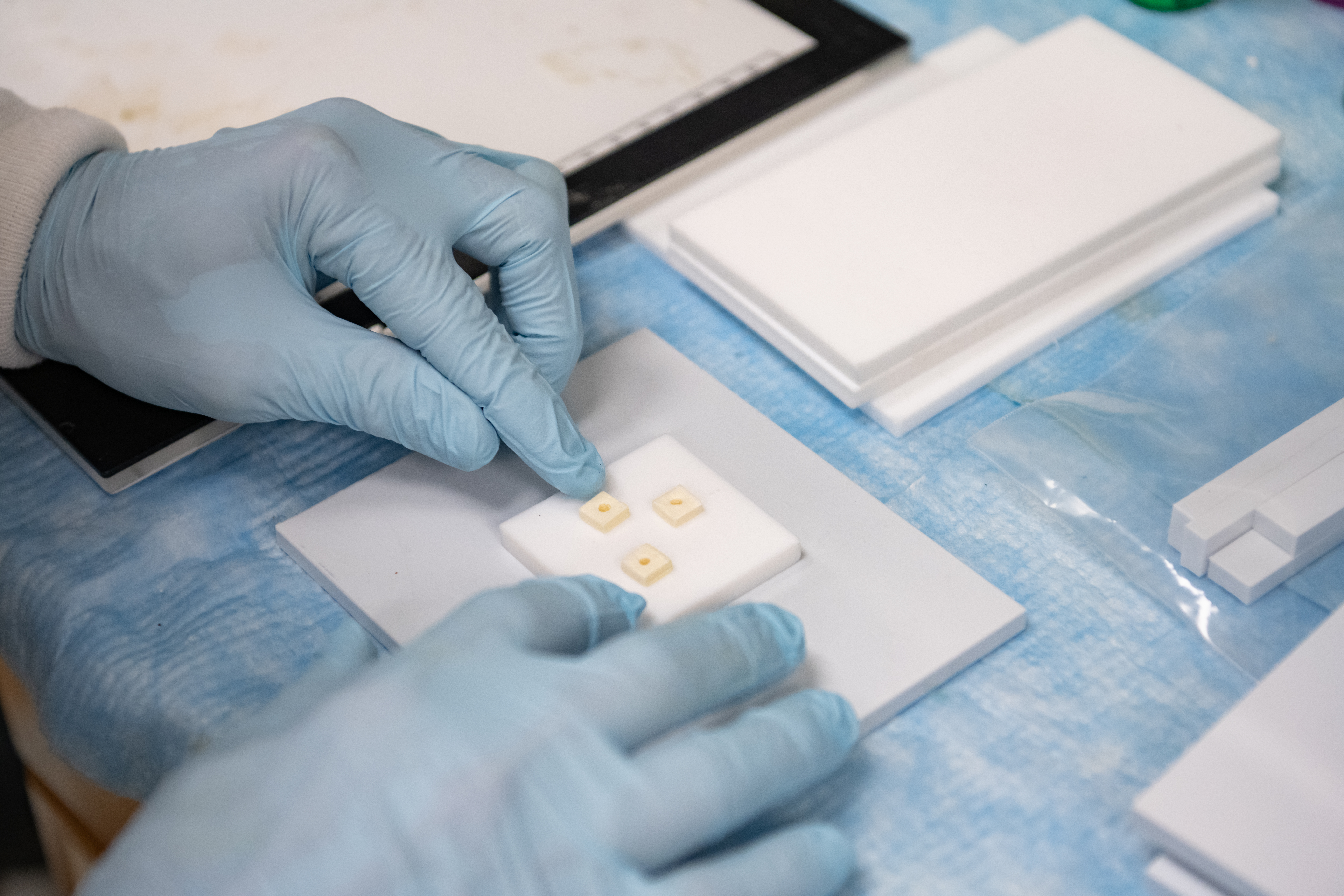
Two hands wearing blue gloves work on an experiment by placing small squares on a plastic tile.
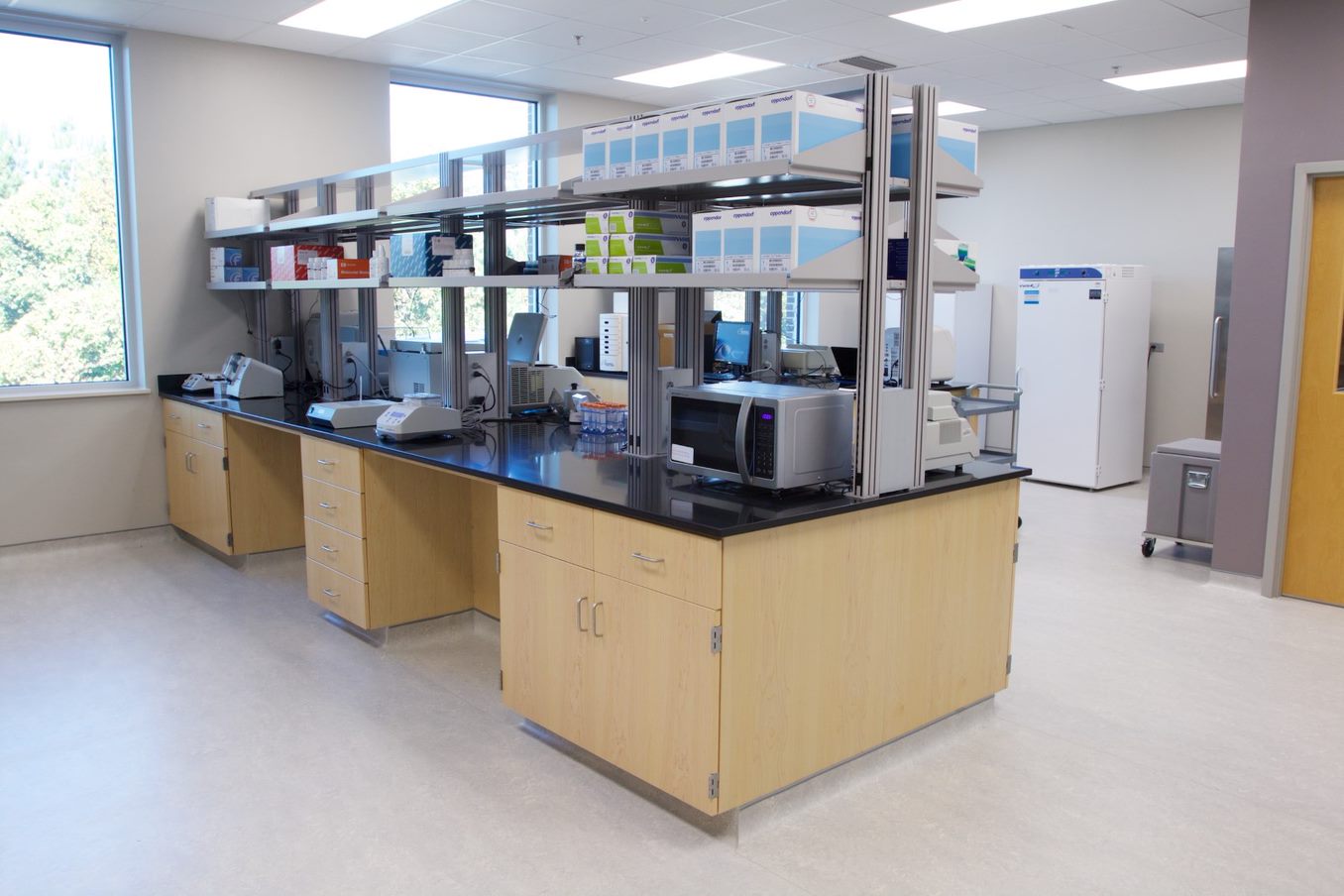
The interior of a laboratory space with various tabletop equipment and supplies up on shelves.
A woman wearing an orange shirt and black gloves works on a metal machine made of pipes and wires.

Clemson University, Institute for Human Genetics, Greenwood Genetic Center Partnership Campus

Explore Our Satellite Equipment

Computers

Each faculty, staff, graduate student and postdoc has a high-end desktop computer connected to HP laser jet color printers. All computers have access to a suite of university provided software at no cost, including the latest versions of Microsoft Office, Adobe Creative Cloud, and Matlab. Additional computational infrastructure is described in full in the Research Core Component.

Drosophila Facility

Three Darwin insect chambers; three Percival incubators; 50 Drosophila Activity Monitors; four Leica and eight Olympus dissecting microscopes; Leica S9 dissecting microscope; -80° freezer.

Computer Resources

Leica M165FC fluorescent microscope; Leica SPE confocal microscope; Zeiss Axioplan compound microscope; Zeiss Axiovert inverted microscope, Keyence BZ-X810 all-in-one digital fluorescence microscope.

Laboratories

The laboratories are fully equipped for state-of-the-art molecular biology and functional genomics experimentation, including thermal cyclers, several with gradient capability, a gel imaging and documentation system, a robotic handler, a real time quantitative PCR system and instrumentation for next generation short and long read sequencing. For a full description of the genomics laboratory facilities, see the Research Core Component. All standard equipment necessary for biochemical experimentation is available in the laboratories, including micro centrifuges, bacteriological incubators, an incubator shaker, several refrigerators, -80oC and -20oC freezers, a Sorvall RC5C centrifuge, power supplies, equipment for agarose and acrylamide gel electrophoresis, balances, pH meter, microwave ovens, a GeneQuant spectrophotometer for nucleic acid quantification, shakers, stirrers, hot plates, and other standard equipment. There is a central ultra-pure molecular grade water system and an autoclave, and each laboratory has a Labconco laminar flow hood.

Greenwood Genetic Center: A Hub for Knowledge and Research

Explore Our Partner's Equipment

A scientist in PPE holds a test tube with red liquid in front of a rack of multicolored test tubes.
A scientist in full PPE sitting at a bench pipettes some liquid into a small tube held in one hand.

Laboratories

The microscope imaging core in the Research Division Laboratory has a spectral scanning confocal microscope (Olympus FV1300), an Olympus BX53 Epifluorescent Microscope outfitted with Retiga XM10 Camera System, and an Olymous SZ16 fluorescent stereoscope with filter sets spanning UV, 405, 488, 568. The stereo scope is outfitted with a Retiga DP73 color camera. The Biochemical Genetics laboratory houses four Waters tandem mass spectrometers (Quattro Micro with Alliance 2795 HPLC, Xevo TQD with Acquity UPLC, Xevo TQS with Acquity UPLC and Xevo TQXS with Acquity UPLC), two Biochrom amino acid analyzers, an Agilent Gas chromatographer (GC/MS), a high performance liquid chromatographer (HPLC) with fluorescence detection, a Shimadzu RF-6000 Spectro Fluorophotometer, three multi-detection microplate readers and two spectrophotometers. The lab is also equipped with an Orbitrap mass spectrometer and related instruments for global and targeted metabolomic analyses. The Molecular Genetics Laboratory is equipped with an Illumina NovaSeq 6000 Sequencer (shared with Clemson University), an two Illumina NextSeq 500 sequencers, two Illumina MiSeq sequencers, a Beckman Coulter Biomek FXP Liquid Handler, a Beckman Coulter Liquid Scintillation Counter, two 3730xl DNA Analyzers (Applied Biosystems), an Agilent Bravo Automated Liquid Handling Platform, an Agilent TapeStation 4200, a Perkin Elmer VICTOR Nivo plate reader, a Covaris S220 Focused-Ultrasonicator, a Covaris ME220 Focused-Ultrasonicator, an Applied Biosystems 7000 Sequence Detection System, a QIAGEN PyroMark Q24 Pyrosequencer, nine Applied Biosystems 9700 GeneAmp Thermal Cyclers, two Applied Biosystems 9800 Fast Thermal Cyclers, eight Applied Biosystems Veriti Thermal Cyclers, six QIAGEN QIAxcel Electrophoresis System, AirClean PCR Workstations, a QIAGEN EZ1-XL BioRobot, AutoGen FlexSTAR automated DNA extraction, a Savant DNA Speedvac Concentrator, an Eppendorf Vacufuge Plus Concentrator, an Alpha Innotech Gel Documentation system, and a Konica SRX-101 X-Ray film developer. The Cytogenetics Laboratory is equipped with an Affymetrix Genechip scanner 3000, Genechip fluidics stations 450, Genechip hybridization oven, Genechip 7G workstation, Agilent 2100 bioanalyzer, Sorvall Legend XTR centrifuge, GeneAmp 9700 PCR Machine, ABI 7500 FAST Real Time PCR machines, a Life Technologies QuantStudio 3D PCR system, chemical hoods, incubators, ovens, an anti-ozone chamber, four Air Clean 600 workstations, four photomicroscopes equipped with epifluorescence, two Zeiss microscopes, a Leica microscope and an Olympus BX-50 microscope.  These scopes are attached via digital cameras to a computer system with software specific for cytogenetics and fluorescence in situ hybridization (CytoVision, Leica Biosystems Inc., Buffalo Grove, IL). The Leica microscope is attached to an automated chromosome and FISH slide scanning system (Leica Biosystems GSL-120).

Computers

The GGC’s computer system consists of both a physical and a virtual environment. The virtual environment utilizes a VMware-based hypervisor and has over 40 virtual servers. The physical environment utilizes Microsoft Windows and Active Directory technology. There are over 250 desktops/laptops and over 20 physical servers in this environment. The servers have high powered multi-core CPUs that are used to analyze large data sets, run application software, and store system data. All servers and desktops are secured with endpoint antivirus software. Patching and antivirus scans run weekly. The GGC’s computer system also utilizes multiple SAN (storage area networks) devices. The total SAN capacity is over 120TB. The entire system connects via fiber optic cable, all campus buildings, satellite offices, and the internet. All connections to the internet are secured by a Palo Alto firewall. All emails are secured by an email security appliance. All servers in the data center are protected from power loss by generator power and battery backups. Nightly data backups are run and stored locally and copies of the data backups are transferred off campus to a disaster recovery site.

Join Us in Advancing Research

We invite you to become a part of our mission to enhance health and well-being through groundbreaking research. Whether you are interested in collaborating on innovative projects, supporting our initiatives, or seeking further information, your engagement is crucial to our success. Together, we can make a significant impact on the scientific community and beyond. Reach out to us today to explore how you can contribute to our efforts and benefit from our state-of-the-art facilities and expert teams.